
The Adams County Arrest Log
The county's official rolling view lives on the ACSO Current Inmates Last 72 Hours page. It pulls in far more booking activity than the same-day screen. That makes it the better tool after a weekend or holiday. Keep its limits in mind, though. It is a jail-system snapshot, not a full police ledger. It is not a permanent archive. Entries inside the window can include people already released on a later date. Watch the pagination and letter tabs. Some names age out of view entirely. The portal may still return an older entry by name. ACSO guarantees no online history.
The official 72-hour blotter source appears in this capture:
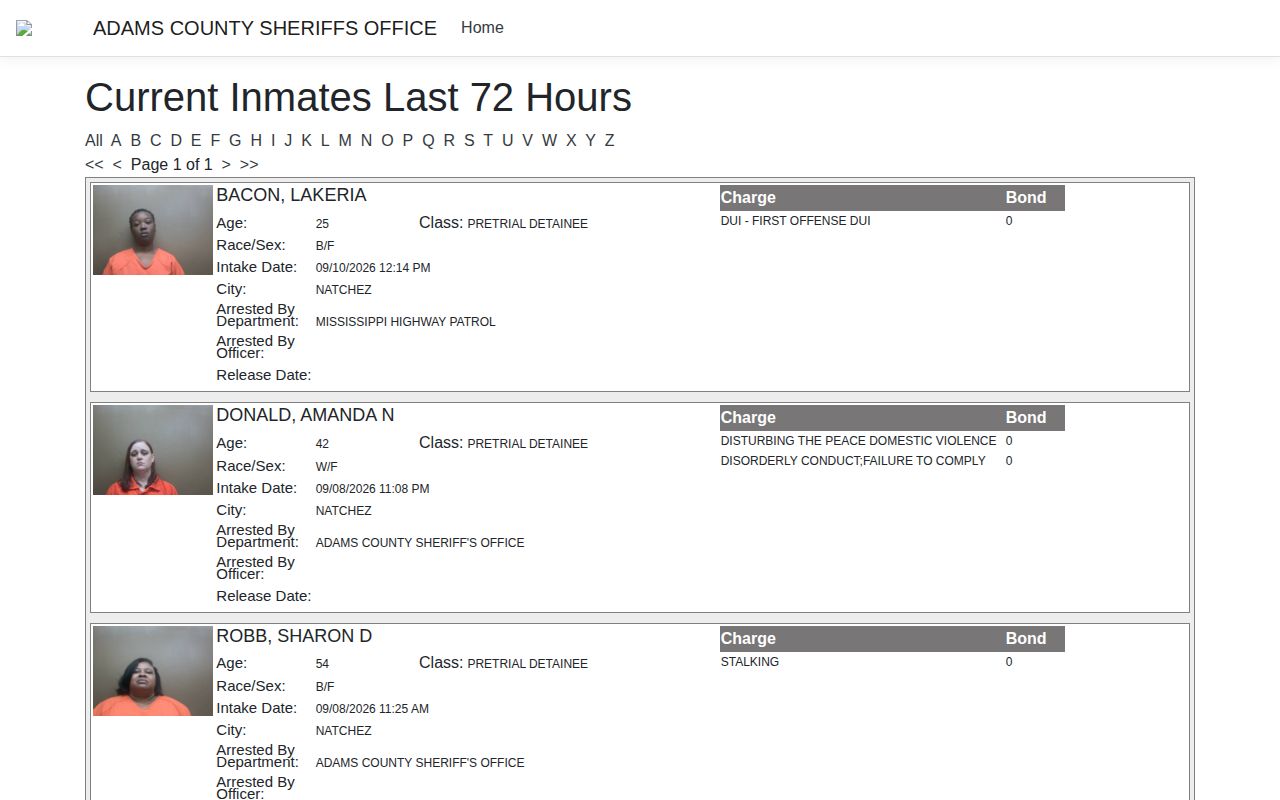
The capture documents the interface; the live official page controls current results.
How to Read the Adams County Blotter
Work from the newest intake times backward. Because the 72-hour filter rolls forward all day, its cutoff keeps moving.
- Open the official 72-hour view and check its heading.
- Review pagination and A-Z tabs, not only the first results.
- Compare name, age, intake time, city, and arresting department.
- Read each charge and bond as booking data, not a court outcome.
- Use the Arrests Last 24 Hours page when only same-day intake matters.
Searching a known name is simpler. The ACSO form takes first and last name, with a released-record option. Take care with the city field, which reflects agency entry habits rather than the actual arrest location.
What an Arrest-Log Entry Shows
The card is a custody snapshot rather than a full incident report or docket.
| Field | Meaning and limit |
|---|---|
| Name and age | Identifiers entered in the portal; confirm spelling and details. |
| Intake time | Jail processing time, not necessarily the arrest or incident time. |
| Department | The arresting or booking agency shown in the record. |
| Class | A custody category, not a disposition. |
| Charge and level | Charges as booked, subject to later court action. |
| Bond and release | Release-related fields that can change or lag. |
| Photo | Shown when available; ACSO warns photos and information may contain errors. |
Not every booking card shows a booking number or court date. Ask for the intake record when those details matter, and turn to court files for later hearings.
Weekend and Holiday Arrests
A Friday-through-Monday search cuts across several operational cycles. The wider window helps. It still can't promise completeness. An agency may be finishing paperwork, and someone released may already be off the current-custody list. ACSO Administration notes that reports may arrive after 10 a.m. the day after filing. That is about report access, not a fixed upload hour. For a named record, use the official public-record request or call ACSO at 601-442-2752.
Archives and Retention
A rolling portal is not a retention schedule. Mississippi's county schedule sets minimums for arrest reports. Certain felony arrests with no limitation period or involving a death stay on file 75 years. Other arrests stay 25 years. Those rules say nothing about a booking card or photo staying online. Old material often lives in files, not feeds. For an older Adams County item, give ACSO a defined date range. Be specific about the record series. That might mean an arrest report, booking or intake record, or release log. An incident report also counts. So does a booking photograph, if releasable. Ask whether it is held, transferred, lawfully destroyed, exempt, or not found. Court files show what happened after the arrest. The Adams County NextRequest portal is the formal submission route. The Natchez Democrat digital edition is a secondary historical source, not an official jail archive.
Adams Arrest News Archives
Local news has its own history. The Natchez Democrat crime-report format used to split Natchez Police Department entries from ACSO entries. It listed names, charges, and bonds. Those dated pages help locate past public reporting on Adams County arrests. They are not a complete jail ledger, and archive access may block some readers. The ACSO press-release archive is official and may preserve selected arrest, warrant, or enforcement announcements. It picks and chooses. It is not a booking-by-booking feed, so official sources deserve the first look. The official ACSO archive appears below:
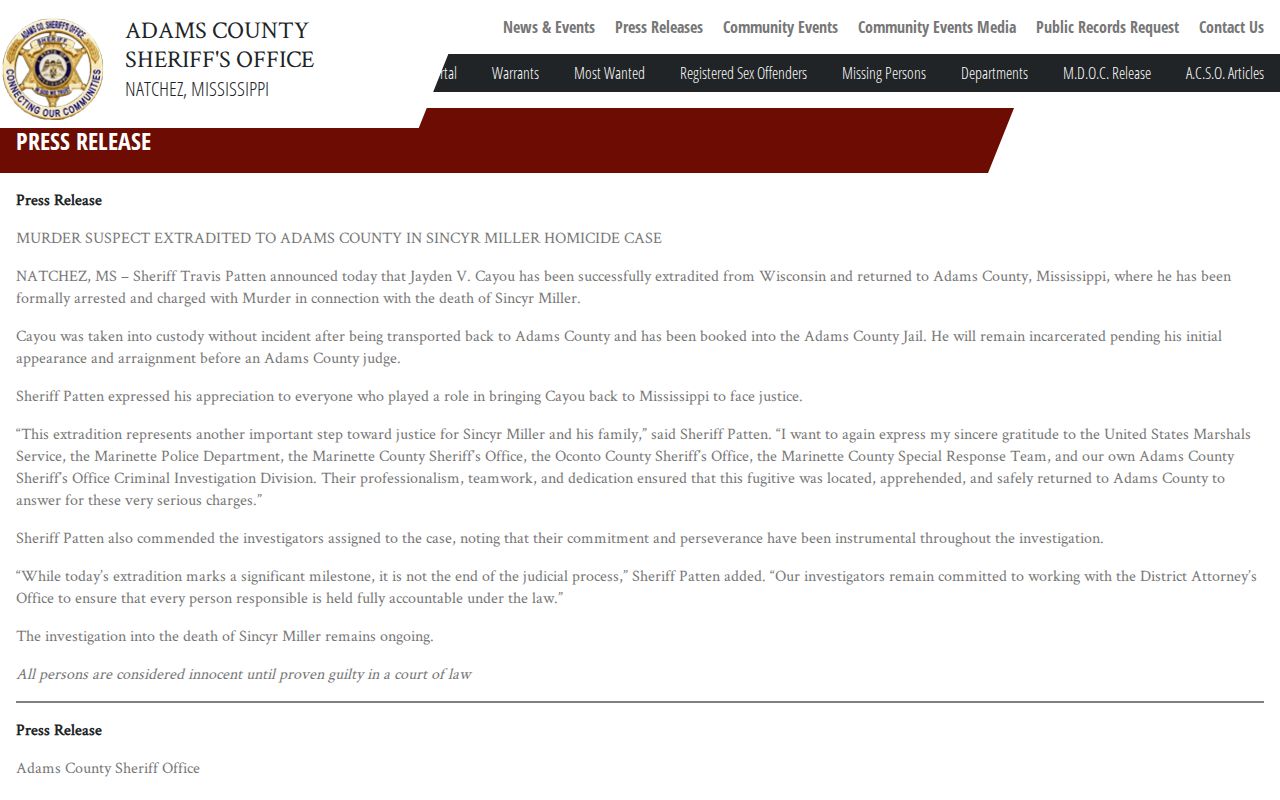
The archive adds official narrative context without replacing the live 72-hour roster.
Unofficial Adams Arrest Timelines
Arrests.org runs an Adams County timeline. It is a private, third-party source. Entries there can be stale, incomplete, or cut off from later court outcomes, so it never settles questions of custody or release. The unofficial Adams County timeline sits below:
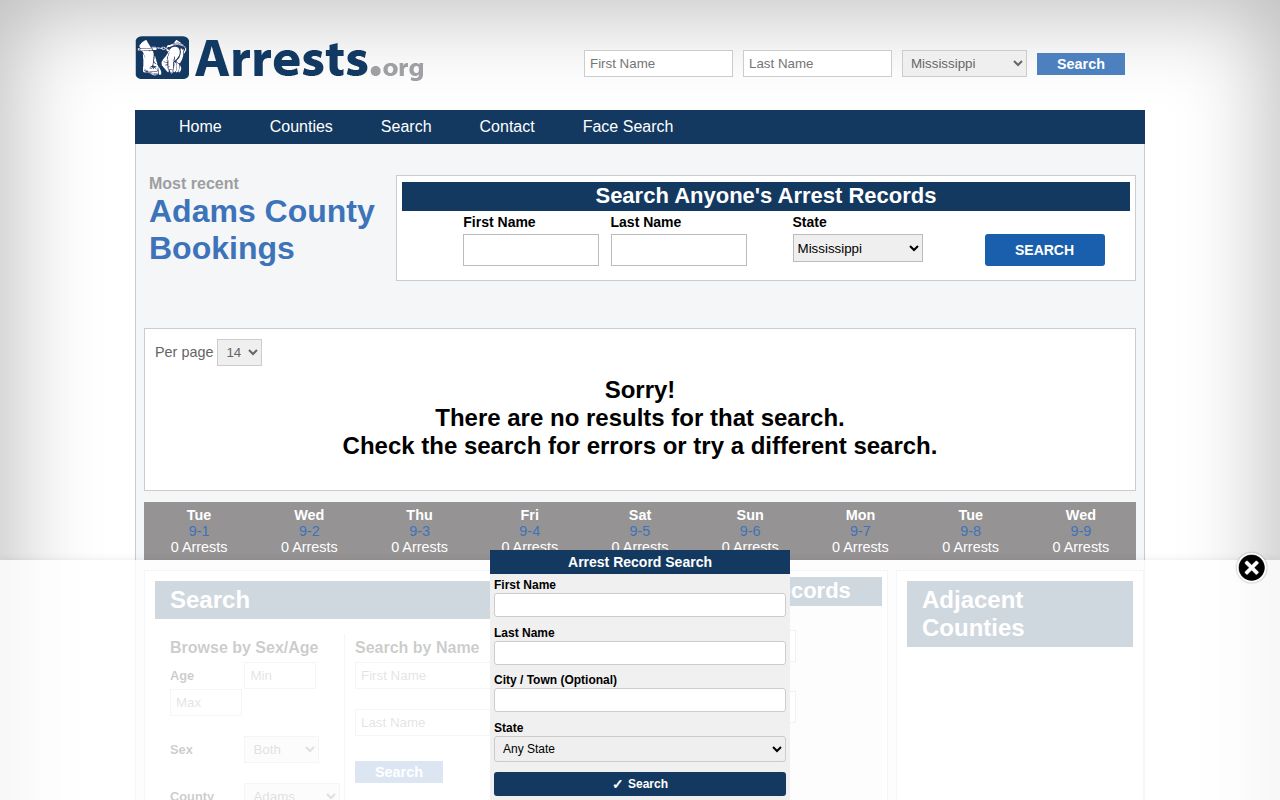
Treat that interface only as a secondary lead. Verify every point through ACSO and the courts. Another local story source may report selected wanted-list events, but it does not function as a routine blotter. Charges can be reduced, dismissed, or no-billed as a case moves forward. The official record is the one that counts.
Adams Blotter Record Boundaries
Every paper trail tells a different story. A jail card logged the booking. An incident report shows what officers wrote down. A press release picks only certain cases. A newspaper item is just editorial coverage. The court docket, filed later, holds the disposition, which is the final outcome of the case.
Treat each document as its own thing. The date on one may mark the incident, the arrest, the booking, or the filing. Never splice fields from several papers into one fake master record. When you keep an old reference, save the source URL and the date you checked it. Then ask the custodian for the official record by a narrow date range and the exact record type.
Retention rules differ too. Mississippi's archival schedule separates arrest reports from offense and incident reports. Most felony arrest reports stay on file for at least 25 years. A few no-limitations or death-resulting felony classes reach 75. The custodian decides how a record is classified, and litigation or an open investigation can extend its life.
Natchez Police matters travel a separate city route. The department publishes no official daily arrest log. An arrest processed through the ACSO jail can still surface in the county portal, so check the department field on the entry. For a city incident report, ask the Natchez Records Division rather than ACSO, which does not hold it.
The sound path runs from live official data to the proper custodian, then to court for the outcome. News archives help pin down a date, though an old story can freeze details that later changed.